In 1977, Leo Zeff had already entered semi-retirement from his psychotherapy practice when a chemist, Alexander Shulgin, introduced him to a drug called MDMA. It wasn’t a new drug, Merck had synthesized it in 1912, the Army tested it as a potential truth serum in the 50s, but it had been forgotten. Shulgin first synthesized it in 1965, but he didn’t try it himself until 1976, when a former student told him that a dose of 100 mg produced a highly emotional experience.
The magic was strong enough that Zeff later called the drug Adam, for its ability to induce what he described as a state of primordial innocence. Instead of enjoying his retirement (and his MDMA trips), Zeff spent the next several years travelling around the United States, sharing the magic with other therapists. He believed you had to experience the drug to be able to conduct therapy with it. At the time, it was entirely legal.
Almost everything that happened to MDMA over the next four decades can be traced back to that trip: the rave panic, the emergency scheduling, the attempts to make it a therapy drug again, and the dozens of analogues sold under increasingly inventive brand names in increasingly grey markets in what was the largest phenomenological drug discovery project ever conducted.
A significant portion of what was sold as MDMA throughout these decades did not contain any MDMA. Many of the compounds that filled the gaps were significantly more dangerous than MDMA, and people died because of it.
At least several hundred chemicals were tried. Few were desired by users; most were there because that was what the producers could source in the face of precursor bans or, like in 2008, the destruction of safrole stockpiles in Cambodia by law enforcement.
The chemists were always ahead of the regulations. A few months after a new ban, they followed with a new, slightly different molecule. Were they better? It is hard to tell. Sometimes they were found in the old literature, unused and forgotten; sometimes they were old medications; sometimes completely new substances.
Drug development is expensive for a lot of good reasons, and unexpected side effects or long-term complications are one of the main ones. You can design something that seems perfectly calibrated for the receptors you want, only to later discover that it also causes heart issues. And everyone has seen an article about a new miracle drug making mice live twice as long and completely inactive in humans.
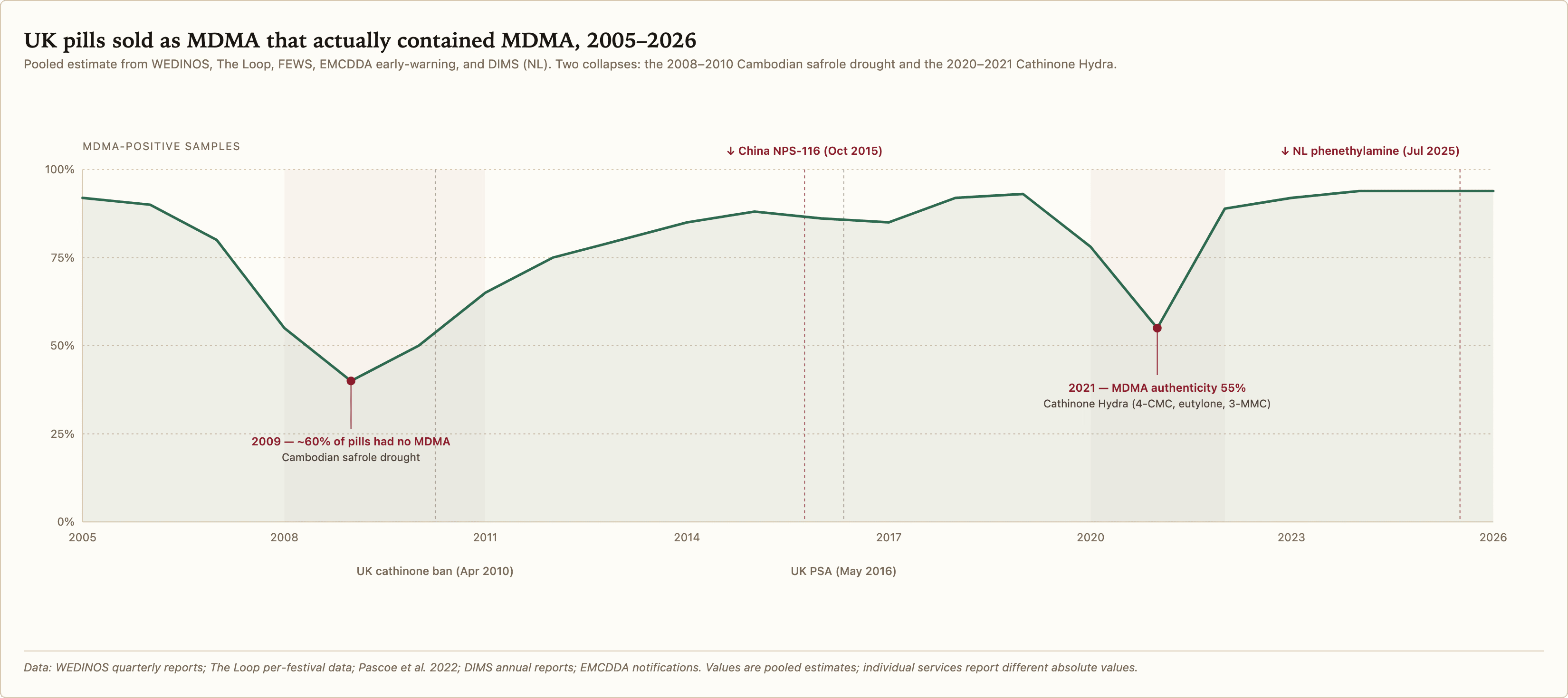
MDMA is different from many other drugs in that users generally buy pressed pills rather than powders, and the UK happens to publish the best public data on their composition. Party-goers are not regular drug users; they don't have milligram scales and often don't even know what the correct dose is. This ignorance often leads to their deaths, despite the drug being relatively safe in overdose.
2006
The Boring Market
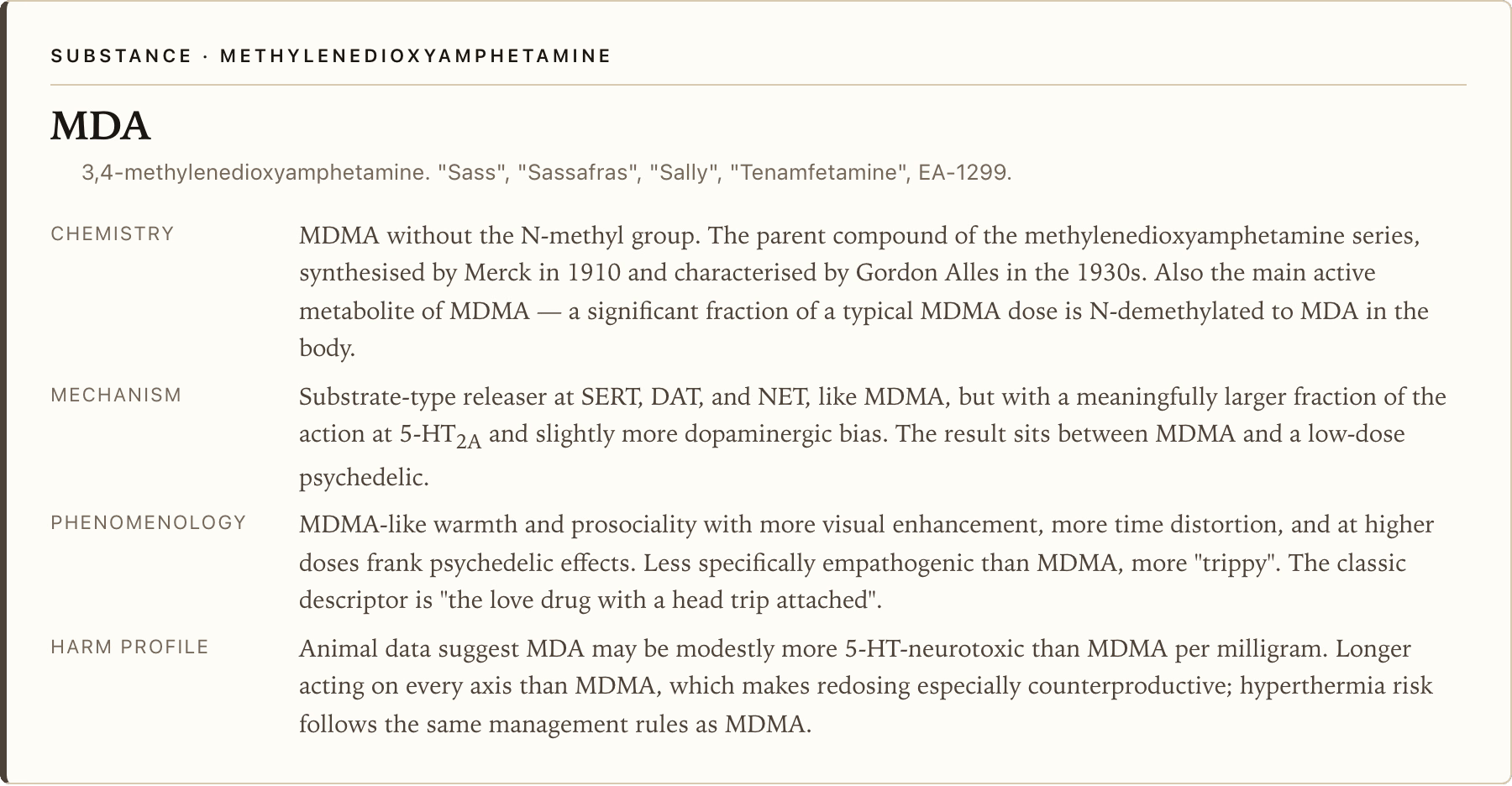
We'll start in 2006, just twenty years ago (yes, 2006 was twenty years ago). That year, the market was boring. Most pills sold as MDMA contained mostly MDMA. Not all dealers were honest, and some cut the pills with amphetamine or caffeine, but rarely anything else. Sometimes they would sell something called MDA.
Both MDMA and MDA, like many of the other drugs that will appear later, are substituted amphetamines — sometimes evident from their names. MDMA’s full name is methylenedioxymethamphetamine. The main difference between these compounds is the proportion between their serotonergic, dopaminergic, and noradrenergic effects. Serotonin is what drives the pro-social effect. MDMA is heavy on serotonin; amphetamine doesn't release serotonin at all. MDA sits roughly in the middle.
2007 · 2008
The Cambodian safrole shock
To make MDMA, chemists used a precursor called safrole. It was the major component of the essential oil distilled from a tree that grew mostly at high altitudes in Cambodia. Let safrole condense through PMK (3,4-methylenedioxyphenyl-2-propanone), and you get MDMA. For decades, the world's MDMA supply had been quietly underwritten by one tree on one mountain range.
In 2008, the Cambodian government, working with the Australian Federal Police, raided the distilleries and burned 33 tons of safrole oil in the process. Estimates vary, but the destroyed stockpile could have been used to make around 200 million pills. Together with the actions of law enforcement in neighbouring Malaysia and Thailand, this led to a massive shock to MDMA supply.
It was immediately obvious from the testing. By the end of 2008, the amount of MDMA in pills started to drop sharply, and in 2009 around 60% of what was sold as MDMA contained no MDMA at all.
THE 2009 COLLAPSE, IN THREE NUMBERS
- MDMA detection in submitted ecstasy tablets, Netherlands (DIMS): ~60% contained no MDMA
- Safrole oil destroyed in Cambodia, 2008: tens of tonnes, enough for an estimated 200–245 million tablets
- Drought duration: ~mid-2008 to late 2011
DIMS annual reports (Vogels et al. 2009); Australian Federal Police and
Cambodian Government press releases, June 2008.
2009 · 2010
The replacements arrive
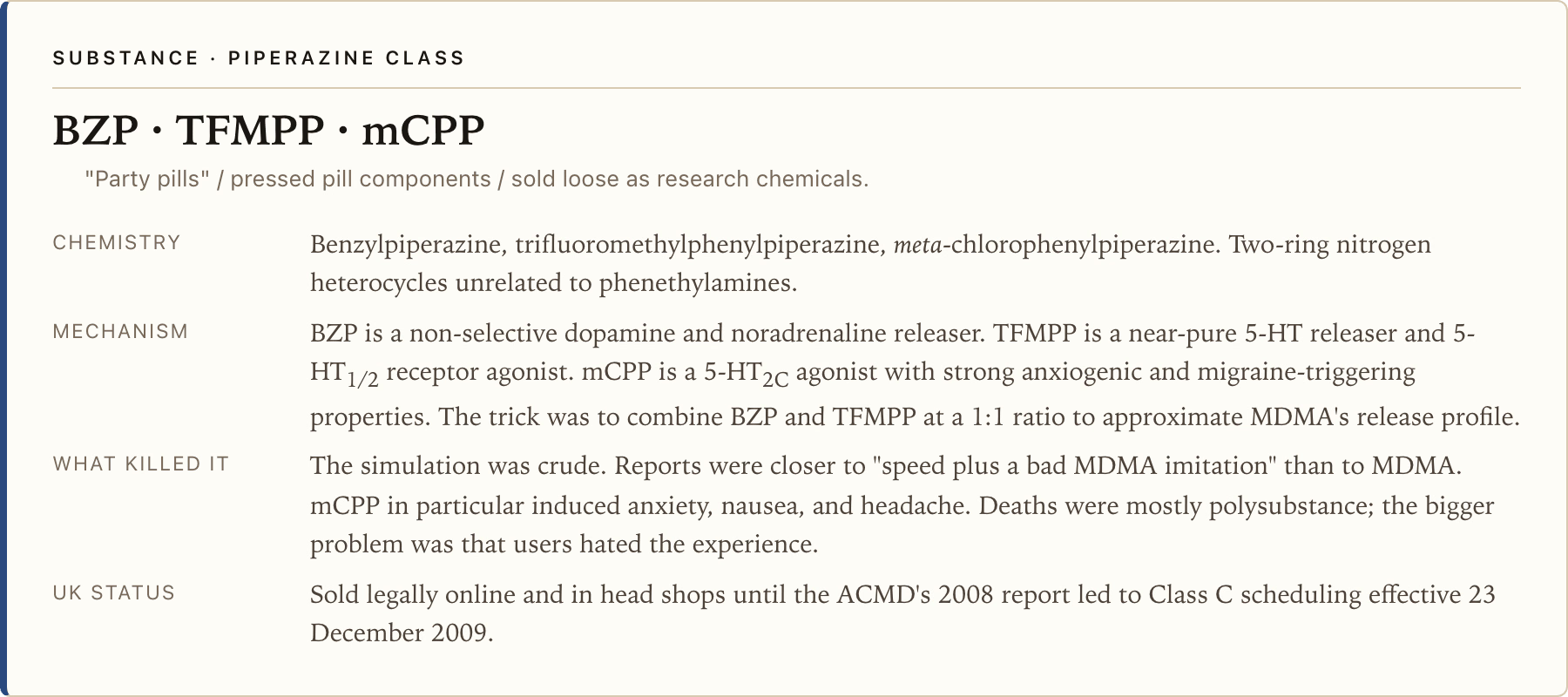
The replacements varied. Chemists understood that by mixing a dopaminergic substance with a pure serotonergic one, one could theoretically replicate MDMA's effects. The result was a combo pill of BZP mixed with TFMPP. Both were cheap and legal. The results were not what they expected. MDMA's effects are not simply about receptors; they are also about how quickly the drug enters the brain and which downstream events it triggers.
Another replacement was something new to the British public. In East Africa and the Arabian Peninsula, there is a stimulating plant called khat, and its main ingredient, cathinone (guess where the name comes from), has long been known for its stimulating properties.
In the early 2000s, cathinone began its crusade in Israel, where it was sold under the brand hagigat. It quickly rose in popularity, eventually piquing the interest of chemists at The Hive, an underground chemistry forum. One of the chemists there noticed something interesting: cathinone was already banned in many countries, but its derivatives were not.
One such derivative was 4-MMC, more commonly known as mephedrone. It was first synthesised in 1929, and then forgotten for more than seventy years. It was not prohibited, and so it was re-synthesised and tried. Unlike base cathinone, mephedrone produced much stronger effects — strong enough that it could be sold as MDMA.
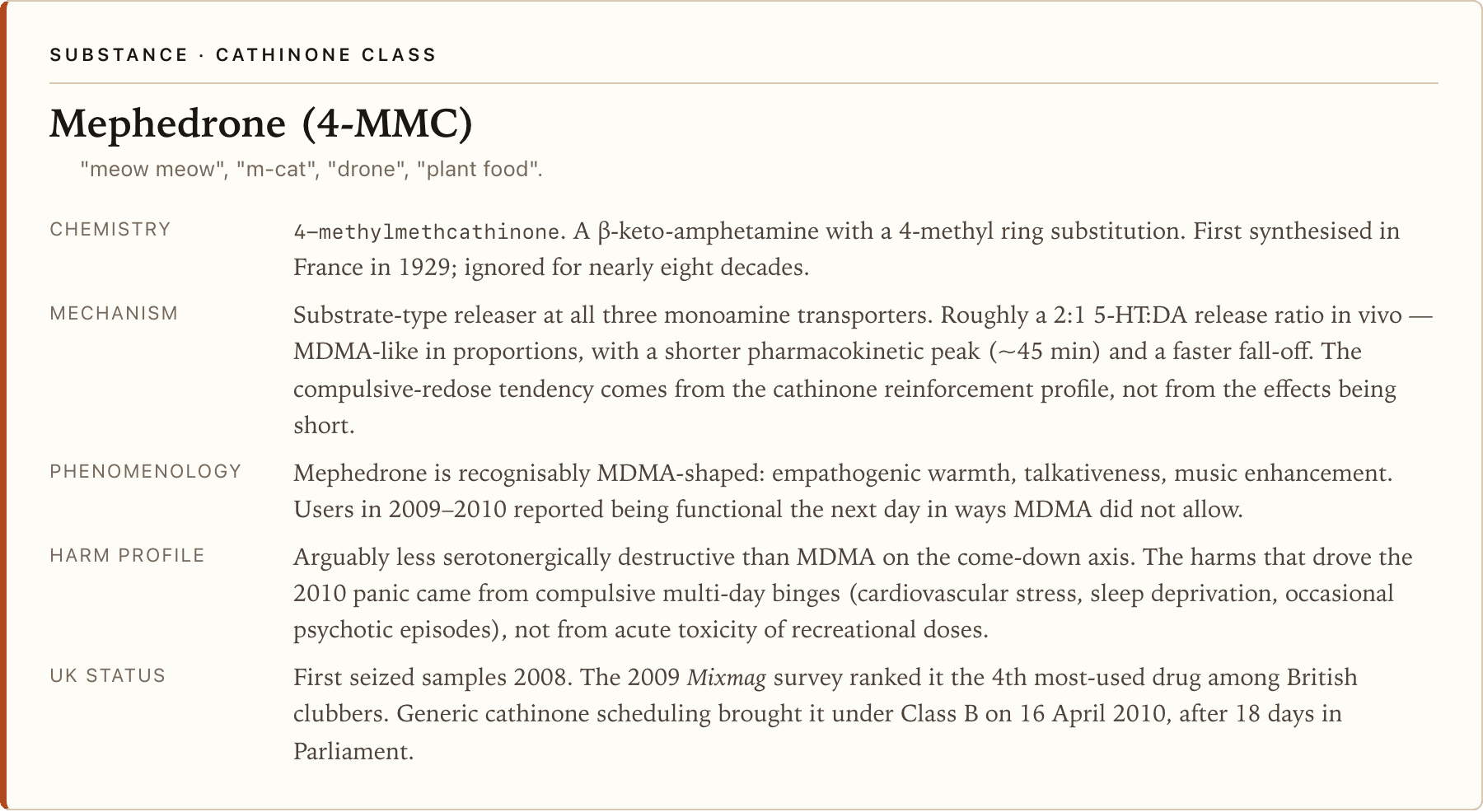
By 2010, the UK Poisons Information Service had logged 2,901 TOXBASE accesses and 188 telephone enquiries about a new group of drugs called cathinones. The reports were chaotic, and the media routinely attributed deaths to the scary new chemicals even when none were actually found. Two Scunthorpe teenagers, Louis Wainwright and Nicholas Smith, died in March 2010 and the press attributed their deaths to mephedrone. Toxicology later found only alcohol and methadone. It did not stop the moral panic. The media reported a figure of 52 deaths. The real number was likely lower, but it did not matter. In just eighteen days, cathinones were scheduled.
The scheduling failed to change anything. 4-MMC was not being synthesised in the UK; it came from Chinese labs. Many users would later report nostalgia for the good old pre-ban mephedrone, comparing it to the boring post-ban Chinese 4-MMC. A lot of the “post-ban” mephedrone was not even mephedrone, but other chemicals like ethylone, butylone, or sometimes just caffeine, that people remembered fondly mostly because of the good set and setting surrounding them.
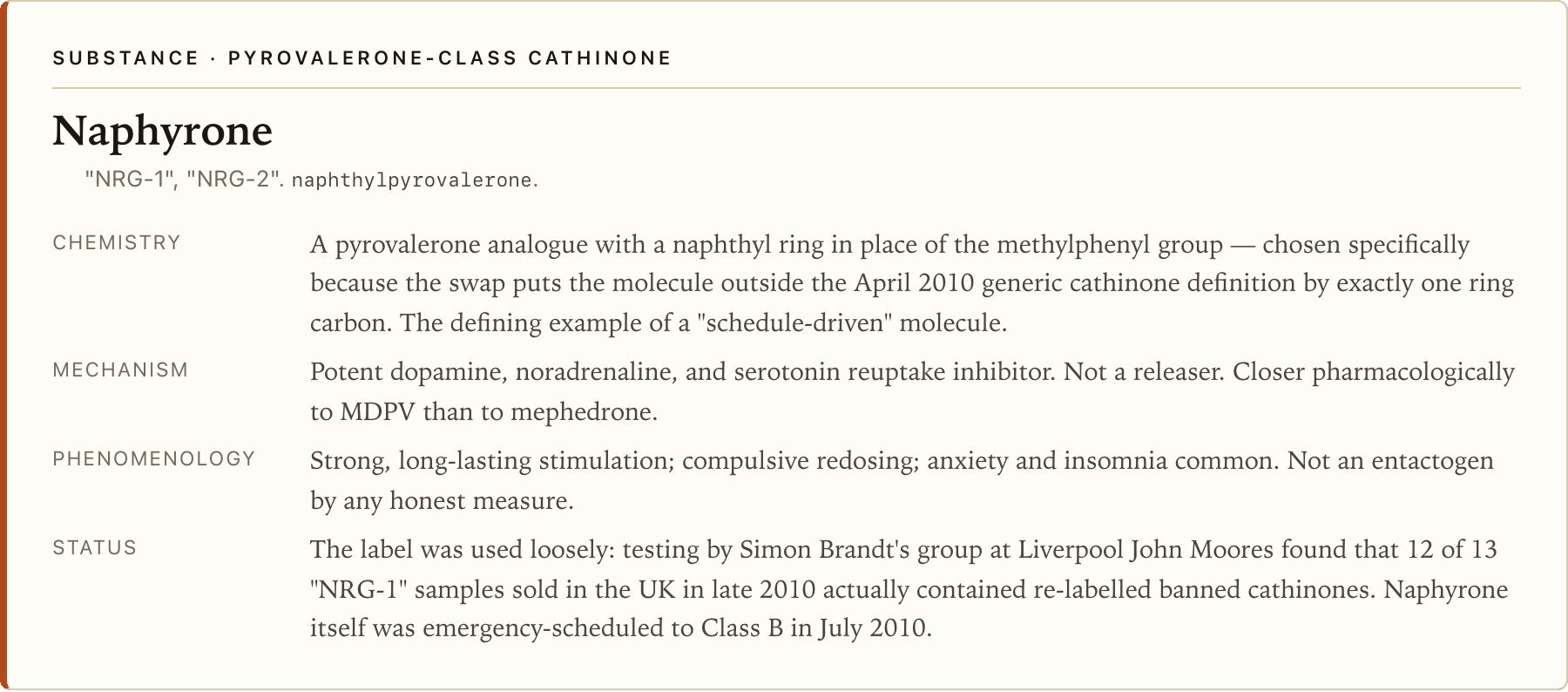
Instead of 4-MMC, websites in the UK started selling new drugs labelled NRG-1 and NRG-2, naphyrone-based substitutes that were distinct enough to avoid the cathinone ban. When tested, however, only 1 of 13 NRG-1 samples bought from UK websites and analysed in Liverpool actually contained naphyrone. The others were all mixes of various cathinones the ban was supposed to have removed.
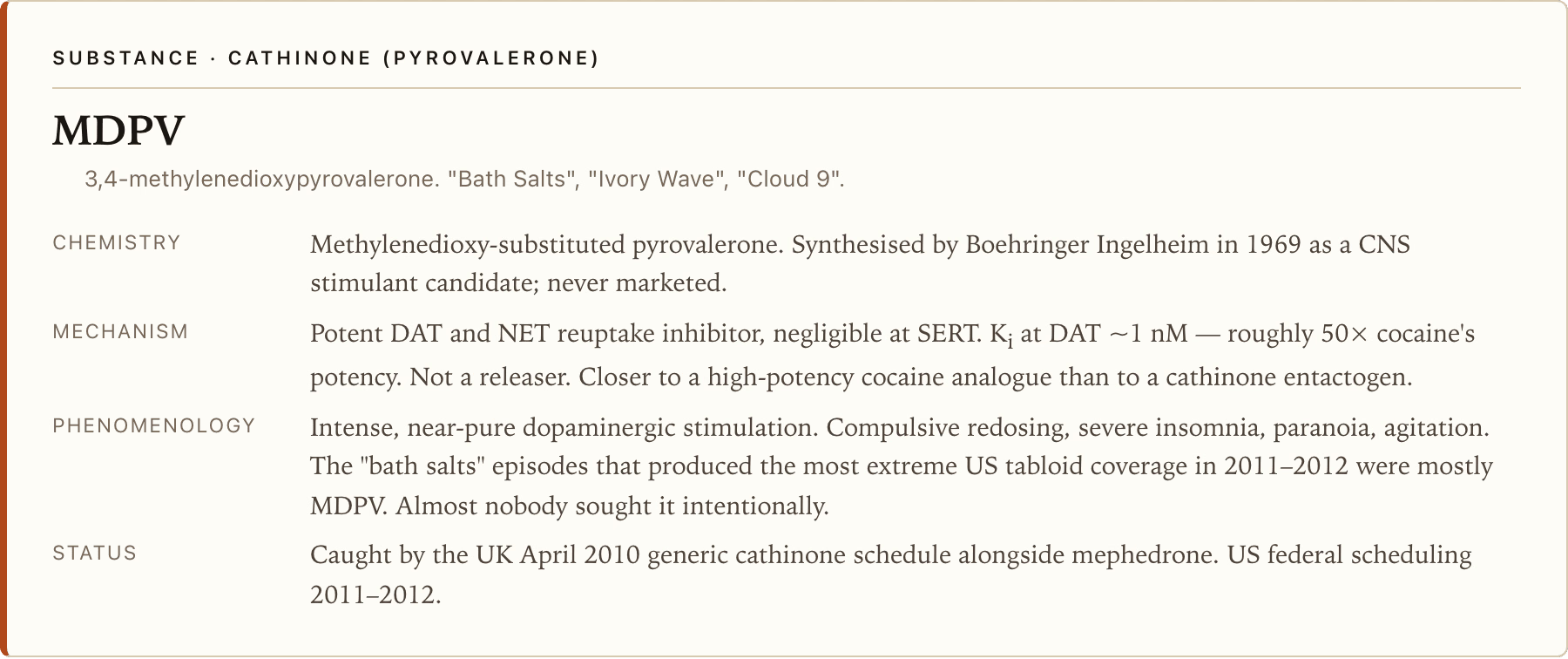
At the same time, in the US, cathinones came to be known as "bath salts", because they were marketed as such. Most of these were MDPV, a chemically distinct compound belonging to the pyrovalerone group.
2011 · 2012
Tracking the wave, and the Dutch model
In 2011, the Home Office created the Forensic Early Warning System (FEWS) to track and identify novel psychoactive substances (NPS). In the EU, the EMCDDA was similarly tasked. The number of new chemicals identified in UK samples rose from 13 in 2008 to 24 in 2009, and FEWS detected 27 more across 2011–2012. In the EU, EMCDDA notifications went from 49 in 2011 to 73 in 2012.
By 2012, MDMA itself began to return. Dutch labs found a new synthesis route that skipped safrole, using PMK methyl glycidate as a precursor. This made substitution less interesting for those operating in the black market. But for grey-market vendors, another opportunity opened up.
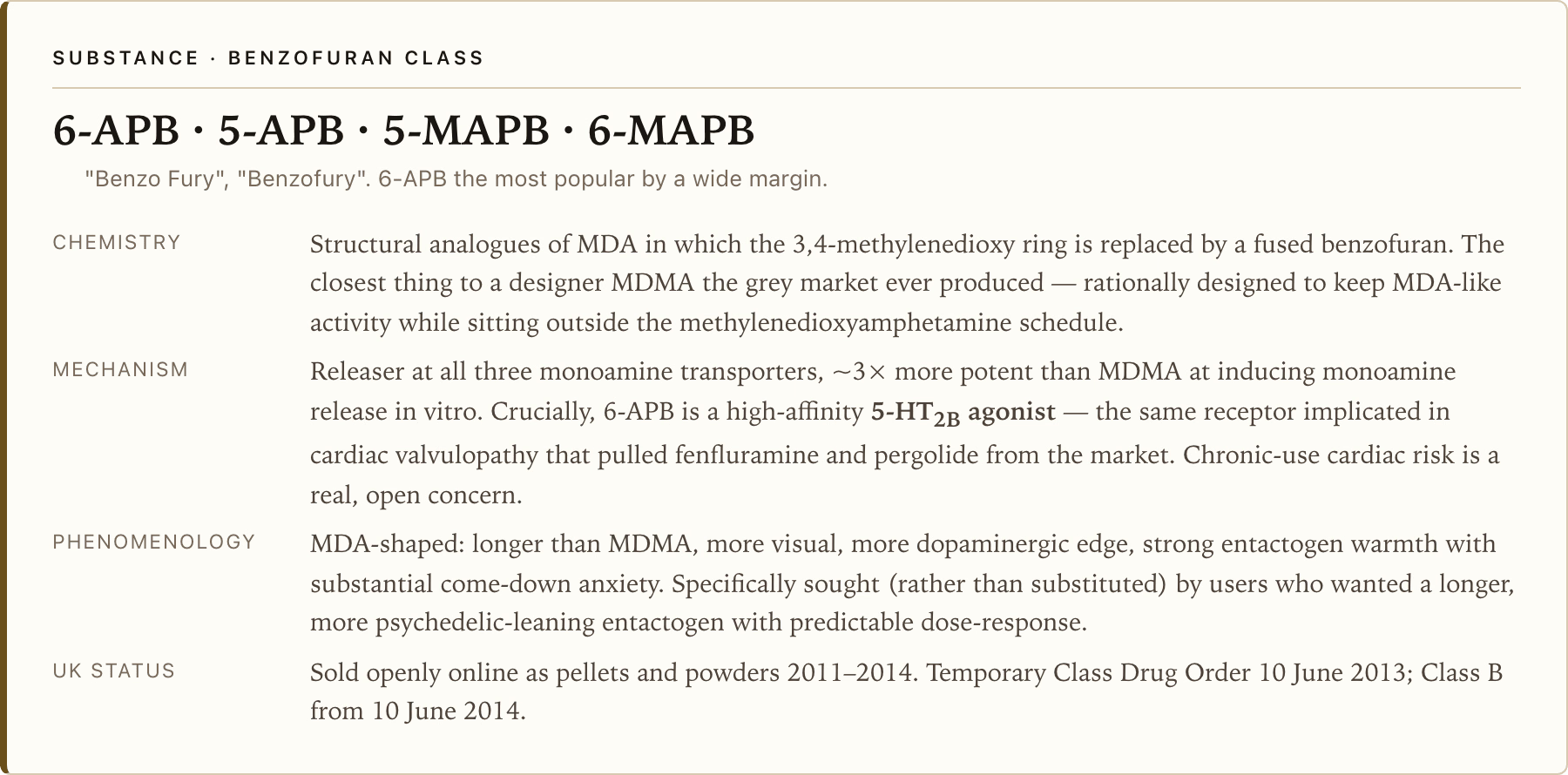
In 1984–1985, David Nichols at Purdue synthesised two kilograms of pure MDMA to be used in scientific research, right before MDMA’s 1985 emergency scheduling. That was not his only contribution. He kept investigating other possible entactogens. In 1993 his group described 5-APB and 6-APB, variations on MDA with a different ring scaffold. The group was called benzofurans.
They never made their way out of the lab until the early 2010s, when European research-chemical vendors rediscovered them and brought them to market. The drugs would become known as Benzofury: usually 6-APB, sometimes 5-MAPB or 5-APB. They did not fully replicate the MDMA experience, but they were legal and easily obtainable.
Around 2014, a combination of different drugs was discovered that could replicate MDMA's effects more fully. Even though they were not the original inventor, the combination became known as the Borax combo — Borax being a Reddit user who popularised it in a 2014 post. The combination was 5-MAPB + 2-FMA + 5-MeO-MiPT. The combo was sometimes pressed into pills and sold under various names for years afterwards. It is hard to tell whether it was actually safer or not, but it was legal, and it usually contained exactly what it was supposed to contain, made by chemists who knew what they were doing.
THE BORAX COMBO — RECIPE AND RATIONALE
- 5-MAPB, ~70–80 mg — benzofuran entactogen core, replaces the MDMA-like prosocial warmth
- 2-FMA, ~20 mg — clean fluorinated amphetamine, replaces the dopaminergic drive
- 5-MeO-MiPT, ~2 mg — low-dose tryptamine, broadens the experience and adds the psychedelic edge
The point was to replicate the MDMA experience while staying outside the methylenedioxyamphetamine schedule, using compounds harm-reduction-aware users could buy from reputable Dutch vendors with declared purity. In blind subjective tests, many users could not tell the combo apart from MDMA. As each component was scheduled in turn, harm-reduction-aware users were pushed back into the pressed-pill market they had been carefully avoiding.
2013 · 2014 · 2015
MDMA recovery, and the Chinese pivot
For a few years, Dutch vendors would sell the new compounds all over the world. By late 2015, MDMA recovery was also complete, and the party-drug market was healthier than it had been in a decade. The problem was no longer adulteration. It was potency. The pills had too much MDMA, not too little.
In the same year, China passed a new law that scheduled 116 psychoactive substances in a single regulation — one of the largest single-event drug bans in history. This immediately affected the supply of precursors and finished chemicals all over the world. The Chinese government had not done this to please the European Drug Commission or the British Home Office: it was done under US pressure, related to fentanyl. The cathinones were just a side effect.
2016 · 2017 · 2018 · 2019
The PSA, the Dutch saga, and the deaths
In 2016, after the failed cathinone ban, the UK decided to bring justice and order in the most efficient way possible by effectively banning all psychoactive substances regardless of chemical structure, unless they were specifically exempted. Caffeine, alcohol, nicotine, food, and medicines got the carve-out; nearly everything else psychoactive was caught by the language of the bill.
The stated intent was to close all the loopholes and reduce drug use. UK Crime Survey data, however, showed that Class A drug use rose in 2016–17. Most of the increase was concentrated in MDMA and cocaine. Users simply switched from legal replacements to their illegal counterparts. Predictable, but nobody cared.
The UK would go on to enforce stricter controls over incoming mail, and with Brexit, the majority of clearnet vendors stopped shipping to the UK altogether. In the rest of Europe, however, the saga continued. 3-MMC came to replace the banned 4-MMC. Fluorinated amphetamines came to replace regulated amphetamine. Among those, 4-FA and the 2-FEA / 3-FEA mix were the closest analogues to MDMA itself, and were often sold alongside it.
The compounds were sold openly and legally, and many of them were produced by the newly created Lizard Labs, a chemical company founded by a British chemist, Alexander Stratford. This laboratory would become the dominant force in designer lysergamides like 1P-LSD, 1cP-LSD, and 1V-LSD — legal LSD-adjacent compounds, not LSD itself — alongside tryptamines, phenethylamines, and dissociatives. Their chemicals were sold as "research chemicals" intended for forensic or laboratory use, and were commonly treated by the harm-reduction community as the cleanest material available.
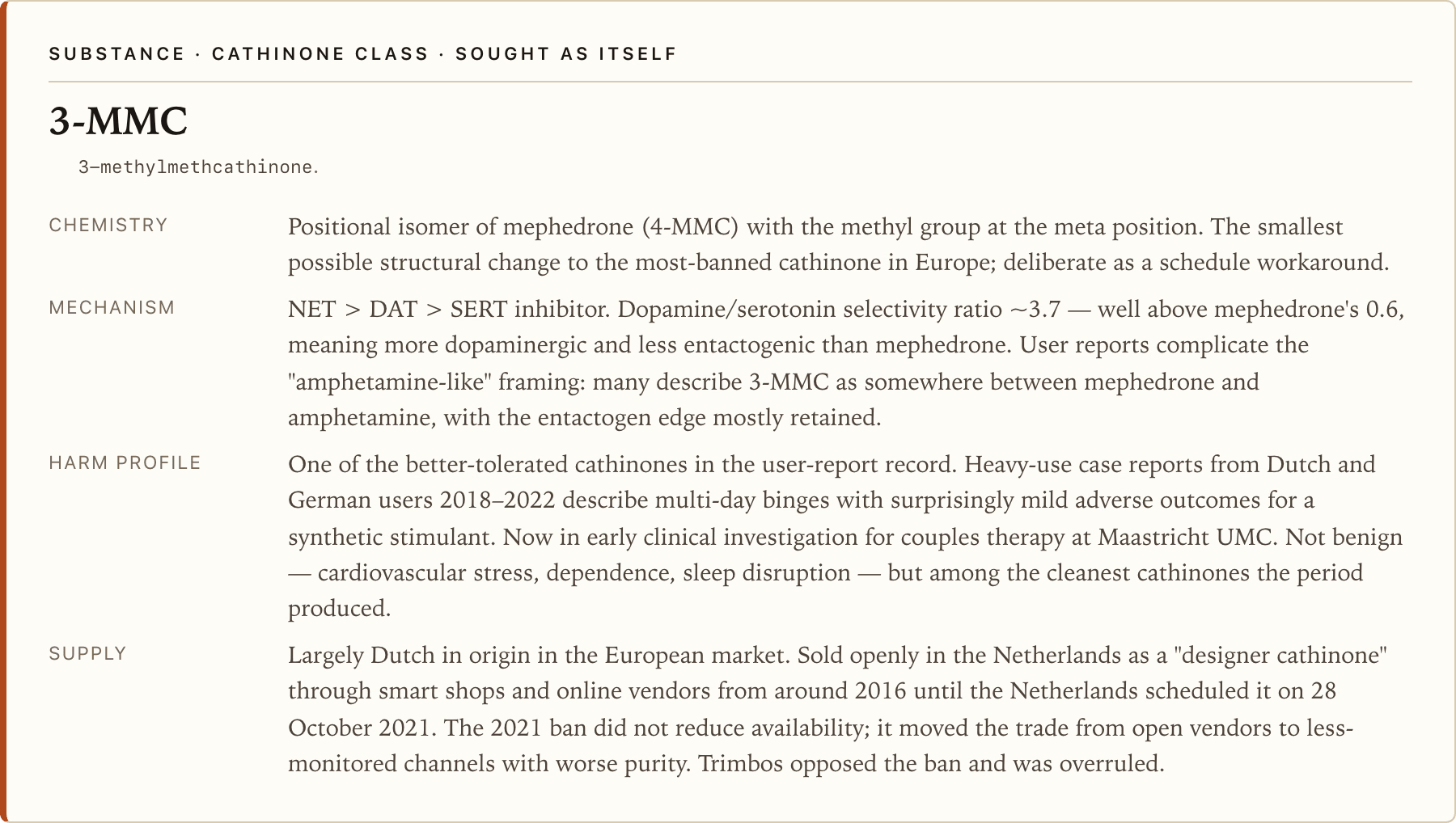
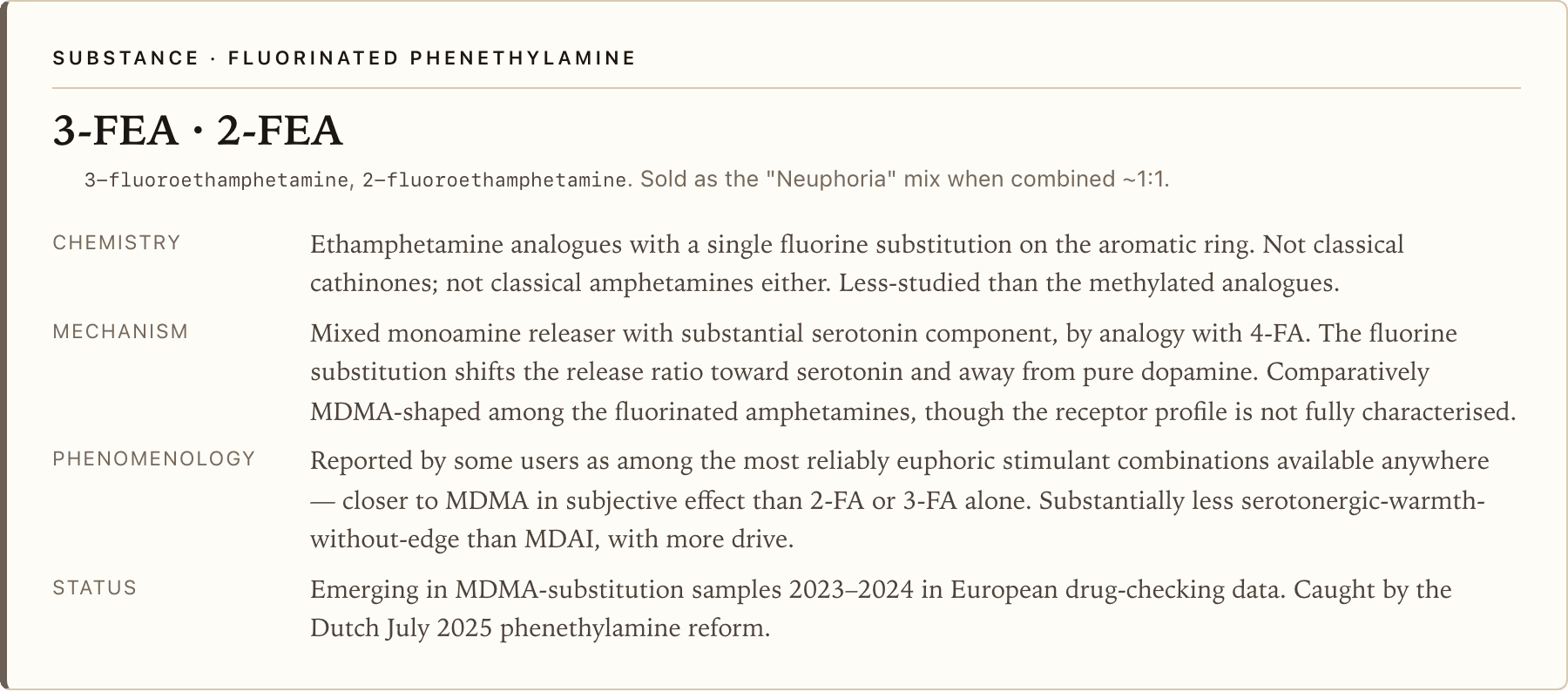
Stratford's stated motive was to address the quality problem of the black market. He wanted to make psychedelic experiences safer for everyone. The lab declared the pharmacology and purity of its compounds and actively coordinated with European harm-reduction organisations. Nothing of their activity was explicitly illegal in the Netherlands.
A substantial portion of the people buying these chemicals were not trying to chase a high; instead, they were buying stimulants like 2-FMA to manage their ADHD symptoms. The grey market functioned as an alternative to often-unavailable medical services, a pattern frequently surfaced in Trimbos and DIMS user surveys.
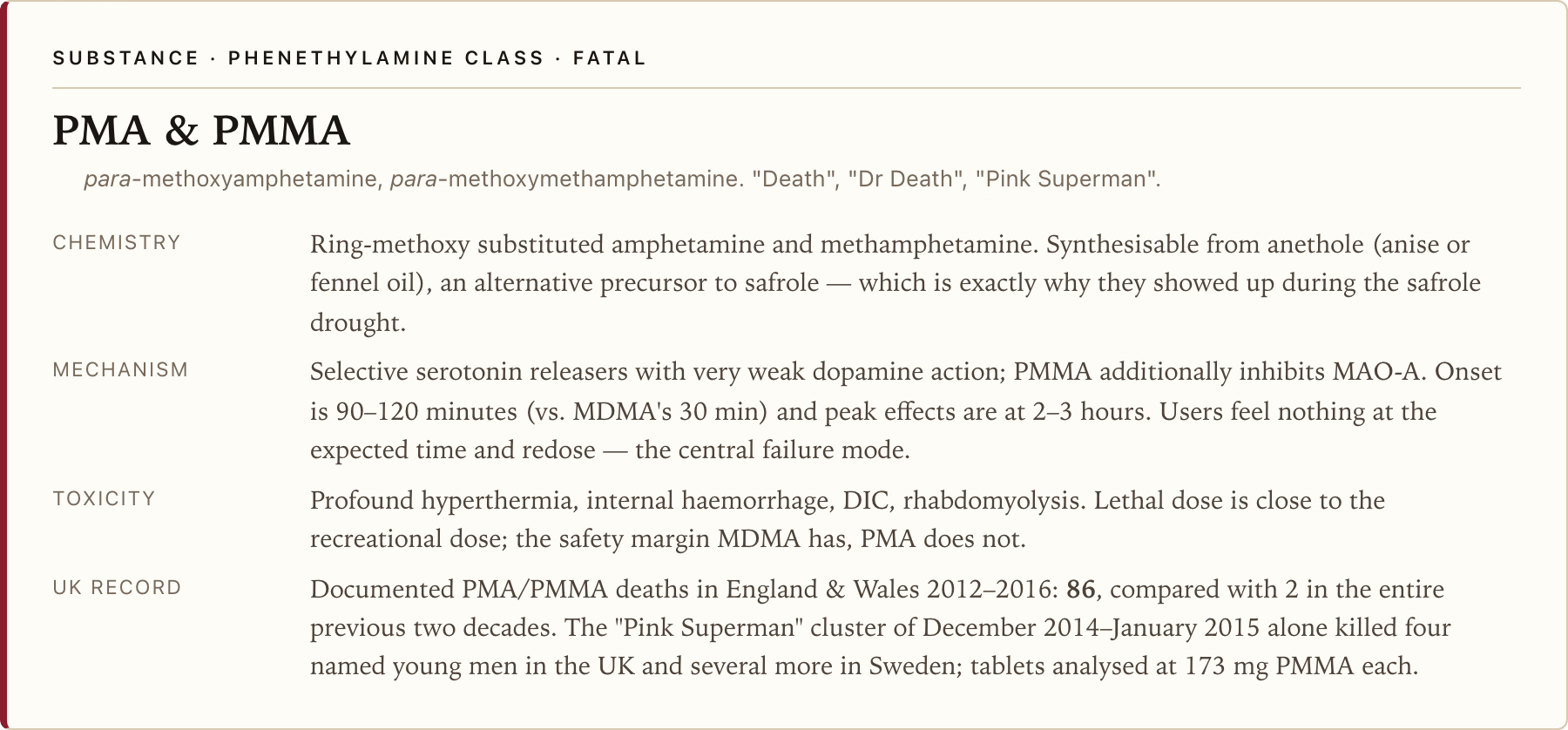
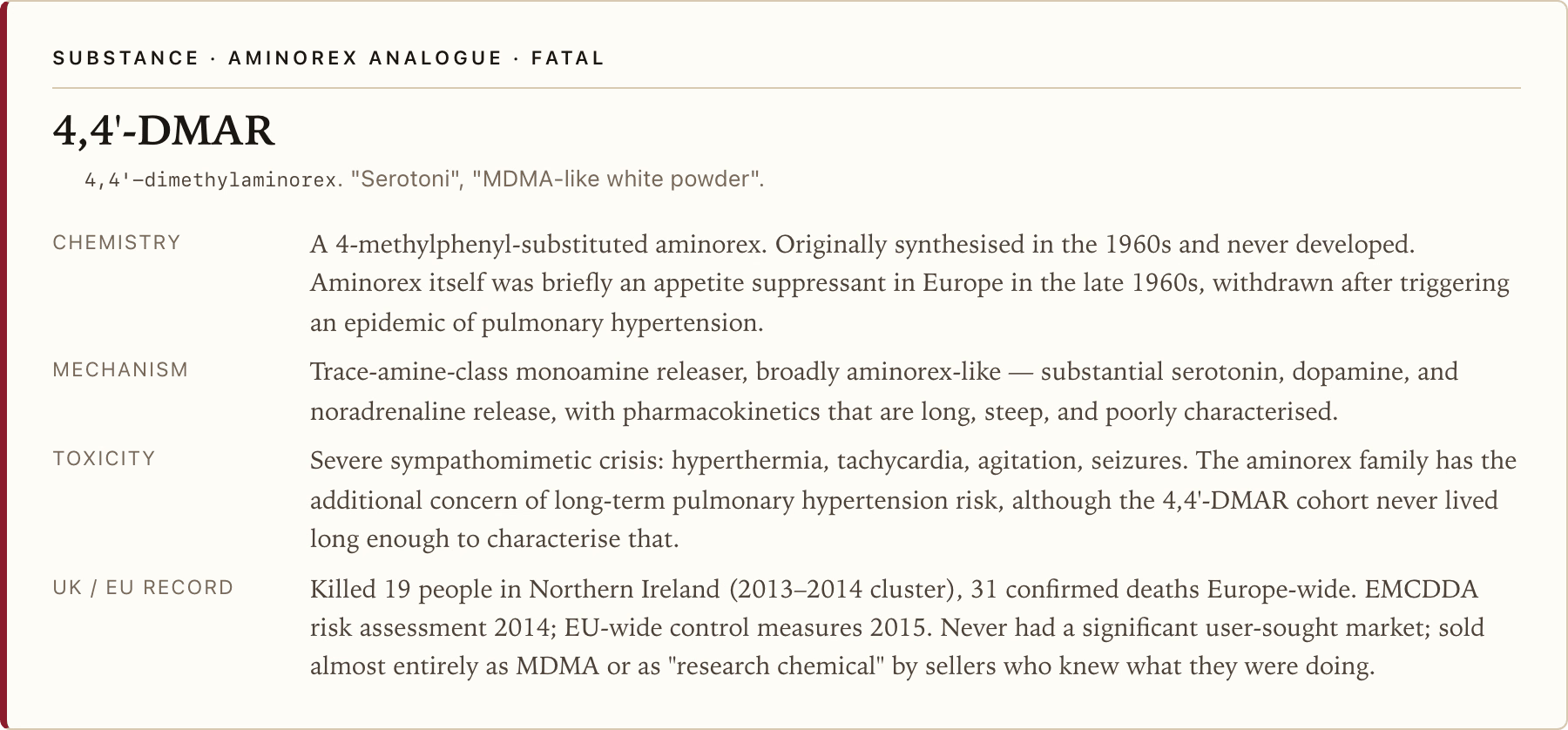
Most of the deaths in that era came from substances that were not desirable or popular, but instead simple and cheap adulterants — like DMAR, a 1960s aminorex analogue, which killed at least 19 people in Northern Ireland alone, contributing to at least 31 confirmed deaths across the UK and Europe by 2014. PMA and PMMA killed 86 people in England and Wales between 2012 and 2016. The benzofurans were safer, though not harmless, and their activity at the 5-HT2B receptor was linked to cardiotoxicity.
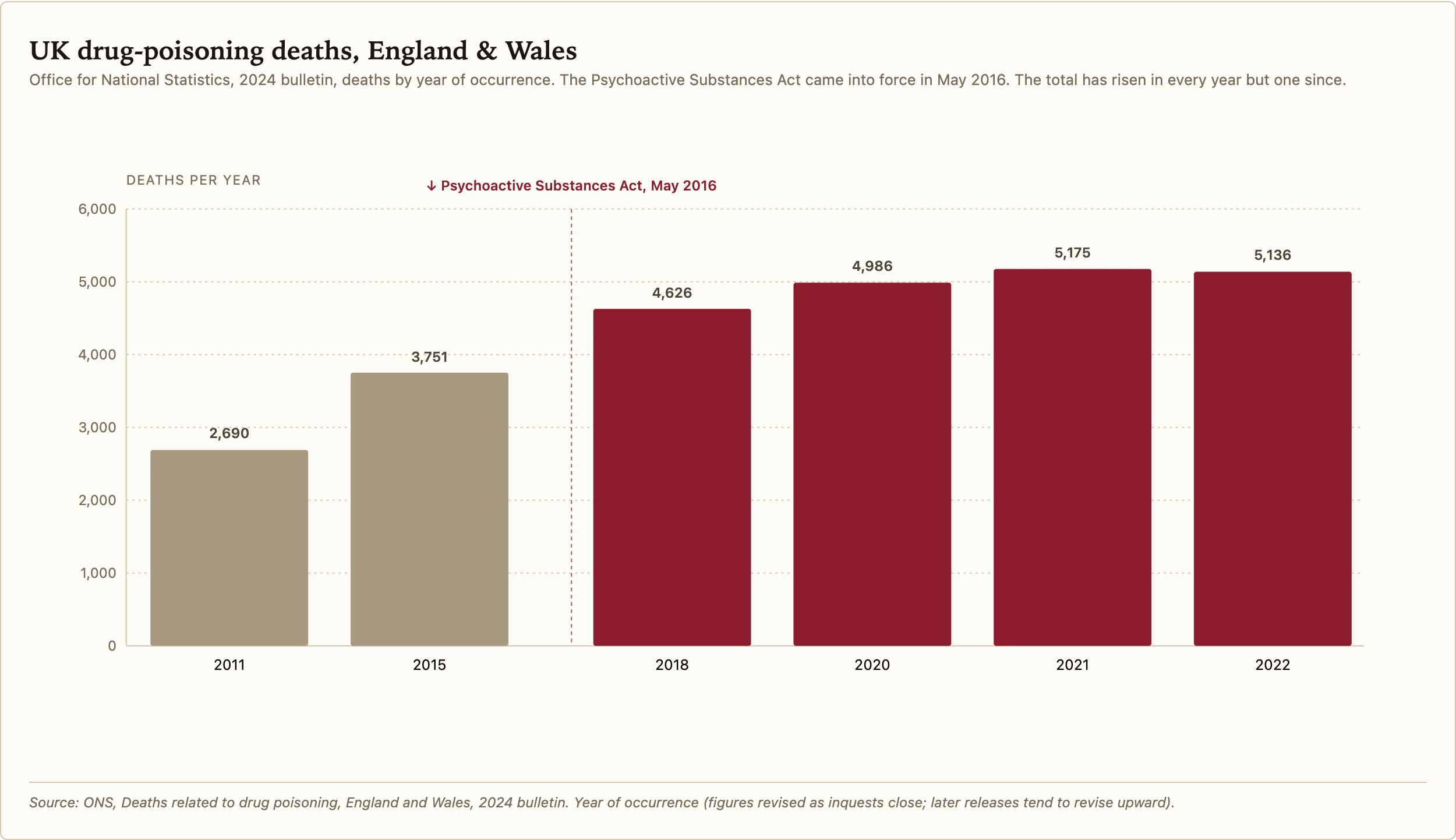
In the UK, however, drug-related deaths continued to rise. Not only did the 2016 PSA fail to achieve its stated goals, it worsened the situation — the same pattern as everywhere else. In 2011, the ONS recorded 2,690 drug-poisoning deaths. In 2015, it was 3,751. After the ban, in 2018, the figure rose to 4,626, and then to 5,136 in 2022. For nine out of ten years after the PSA passed, the total grew. Users moved to established black-market dealers, not to abstinence. The Act traded a problem of some deaths from legal drugs for a larger problem of deaths from users buying unknown illegal substances.
2020 · 2021 · 2022
COVID and the Cathinone Hydra
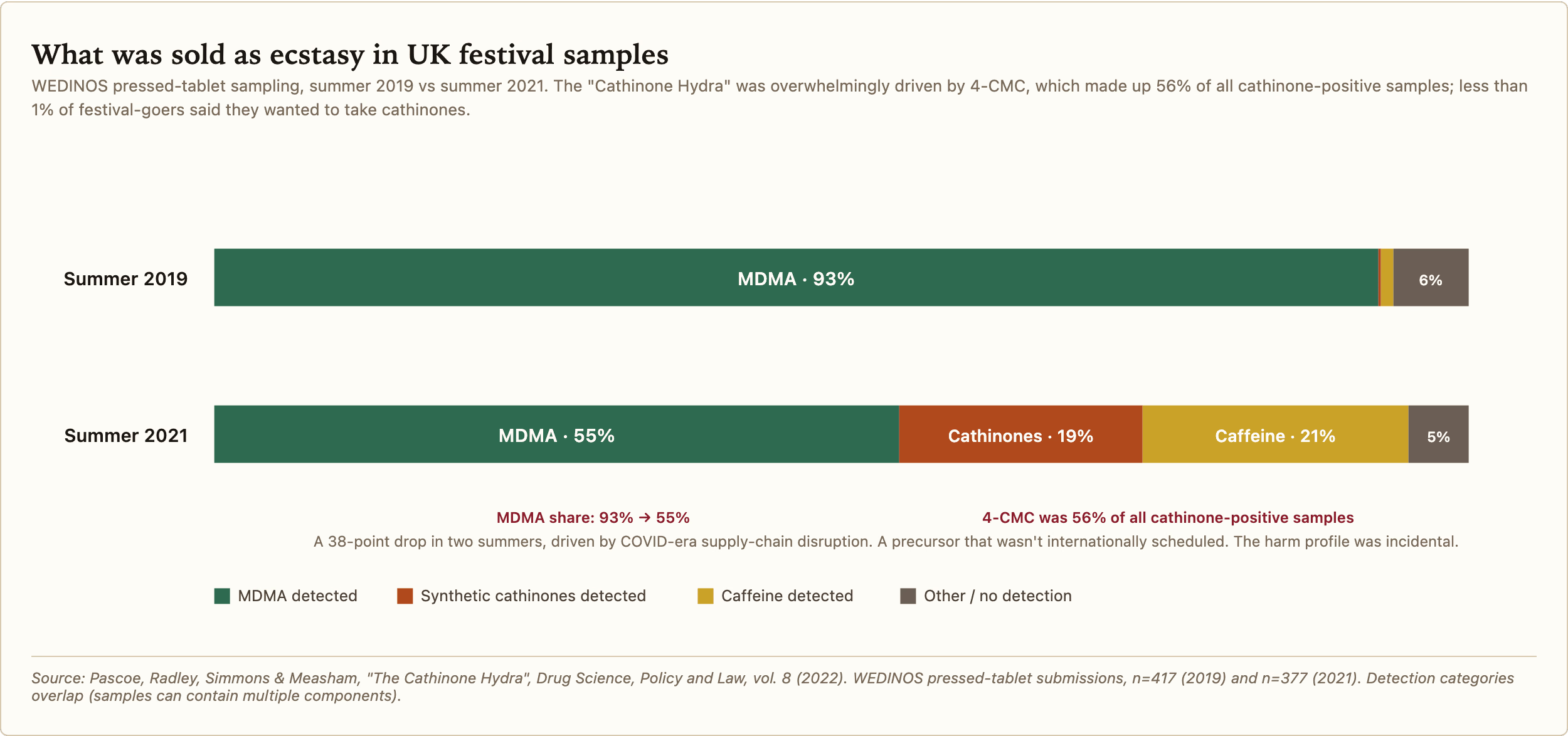
In 2020, COVID hit the world. It hit the drug producers too, drying the supply and closing the nightlife. The gap was filled mostly by cathinones, once again. A 2022 paper called it the cathinone hydra. The numbers showed a reduction of MDMA from 93% to 55%, and a similar rise in cathinones.
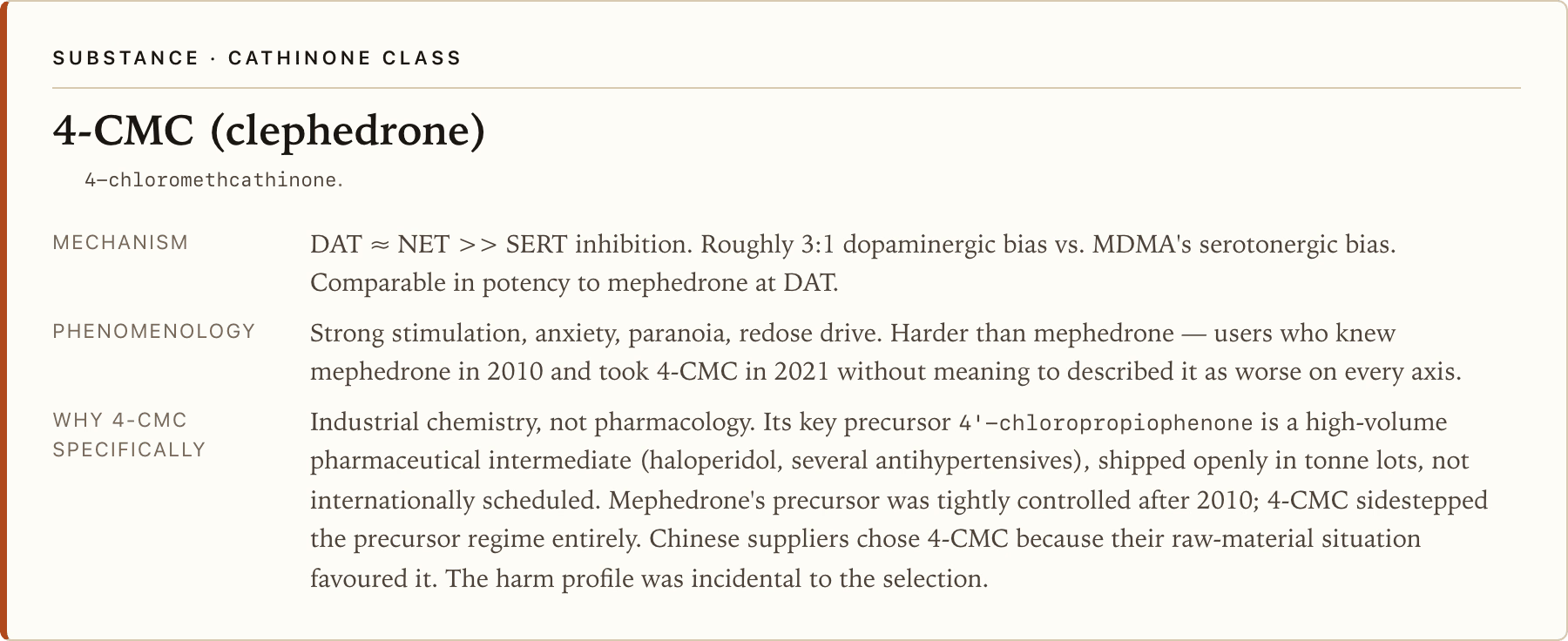
Many of those were 4-CMC. Unlike its close cousin 4-MMC, 4-CMC is made from a widely available industrial precursor, which makes its production easier to start and easier to hide. This change was not driven by demand, but rather by the broken supply chains. Most users did not know they had ingested 4-CMC unless they tested it, and most did not.
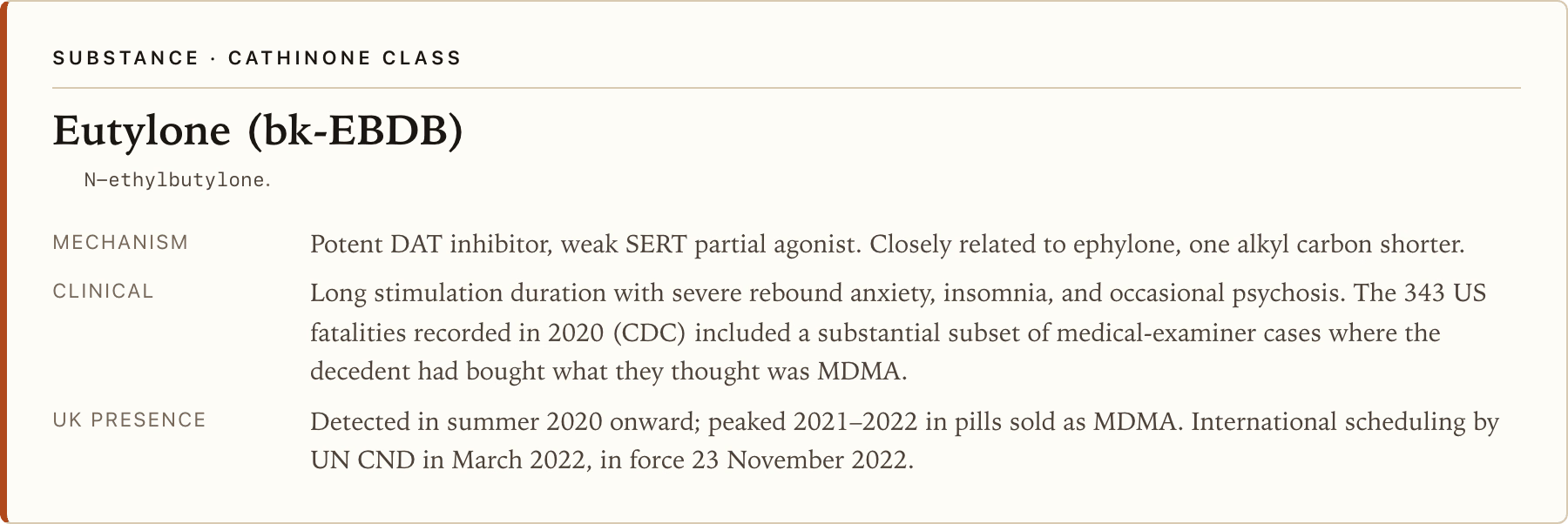
Once the supply chains were restored, MDMA came back. This was not caused by any regulatory action: it happened for the same reason the safrole drought ended — Chinese precursors were available again, and Dutch and other European labs resumed MDMA production. The UK ACMD's Synthetic Cathinones: Updated Harms Assessment, a review published 3 February 2025, documented 71 distinct cathinones in UK seizures or toxicology reports. Most of them have appeared in samples sold as MDMA.
2024 · 2025 · 2026
Lizard’s end, the Dutch reform, and DMC
On 31 December 2024, after twelve years of operation, Lizard Labs ceased operations. It was not the result of any regulatory action. They had survived a 2022 operation in which Dutch police raided a lab associated with the company while US Homeland Security seized their domains, both alleging fentanyl manufacturing. As expected, no fentanyl was found, no substances were confiscated, and the lab was back online within months. But the accumulated pressure from banks, payment processors, and an operating environment that Stratford called increasingly hostile made continuation impossible.
A new ban — this time a class-wide one — was being discussed in the Dutch Parliament. After a few delays, and despite the resistance, the phenethylamine ban finally passed in July 2025, ending the era of legal stimulants and entactogens.
Some people described it as closing a loophole; in fact, the Netherlands had long held a tradition of distinguishing between explicitly banned chemicals and general non-medical chemicals. It was a deliberate public-health choice. The reform did not close a loophole — it just made things worse for consumers, and broke the tradition that had produced Trimbos, DIMS, and most of what is good in European drug policy. The ban was opposed by Trimbos, harm-reduction advocates, and many in the health industry. The reform passed anyway.
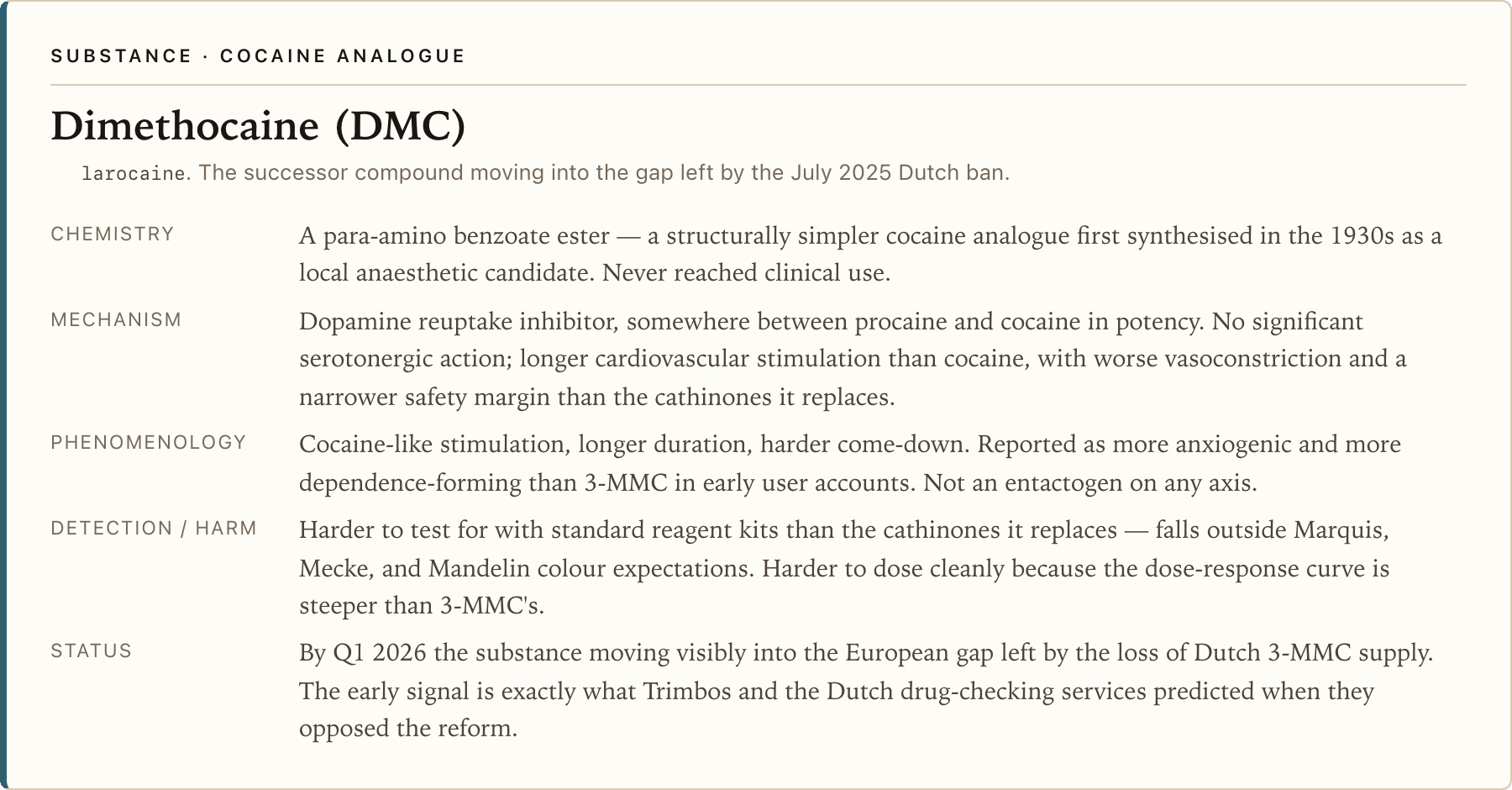
The results were unsurprising. The substances changed, with the new ones being cocaine analogues like DMC, with a worse pharmacological profile than the cathinones they replaced. Users aren't switching to abstinence; they're switching to worse drugs coming from worse suppliers. This is the same failure mode every prior prohibition action had, with the same evidence basis and the same outcome.
What twenty years of failure tells you
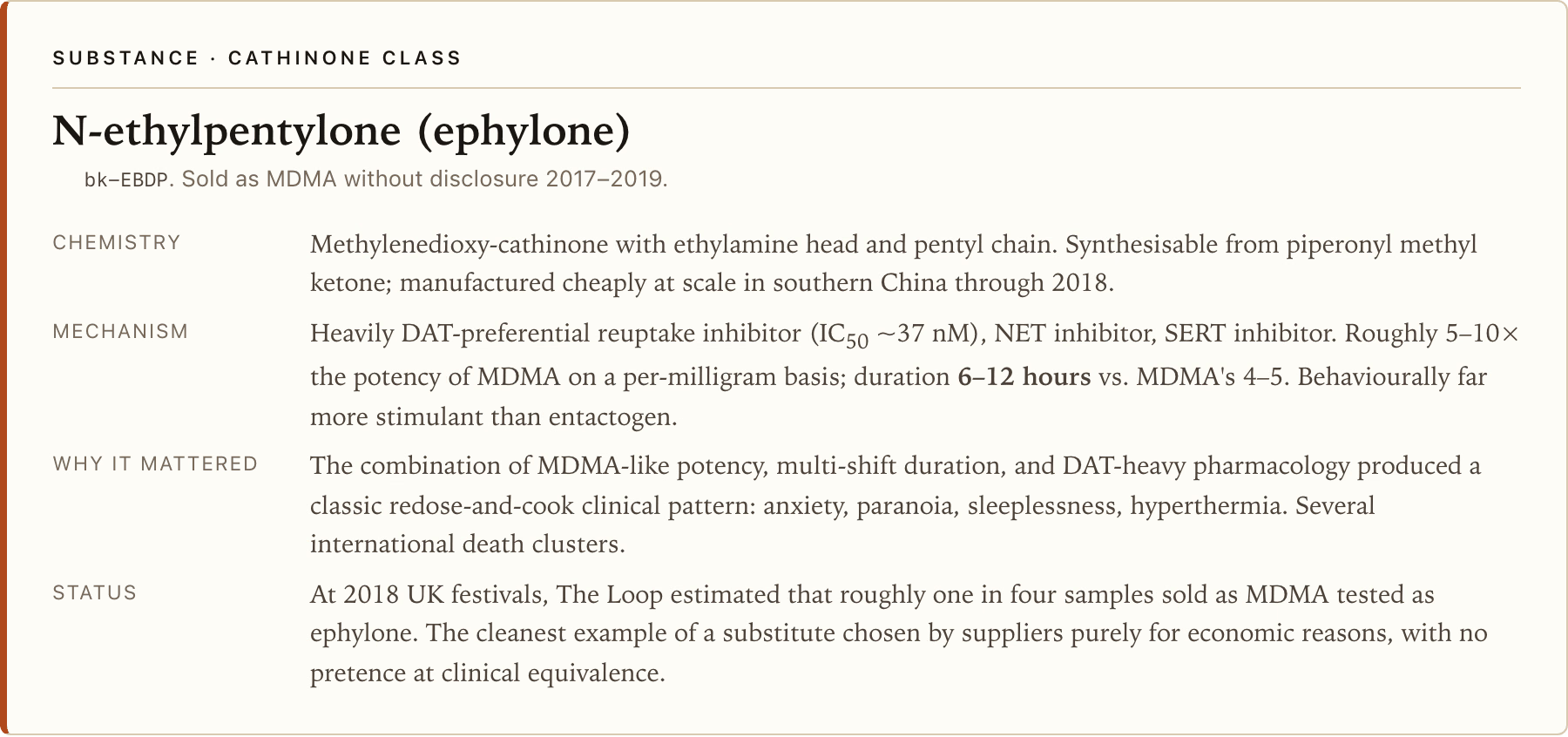
The grey market is good at one thing and generally bad at most other things that matter in drug discovery and design. What it is good at is finding chemicals that target the desired receptors. Whether this produces toxic metabolites, off-target activity, poor kinetics, or compounds that are simply too strong is not the main concern. Nobody is running placebo-controlled blind studies with research chemicals, especially when they know the molecule will be banned in a year or two anyway. PMMA hits the right transporter, but it has a 90-minute delay, so users redose thinking it didn't work and end up overdosing. Ephylone hits the right transporters, but lasts twelve hours. 4-chloroamphetamine (4-CA) is straight up neurotoxic.
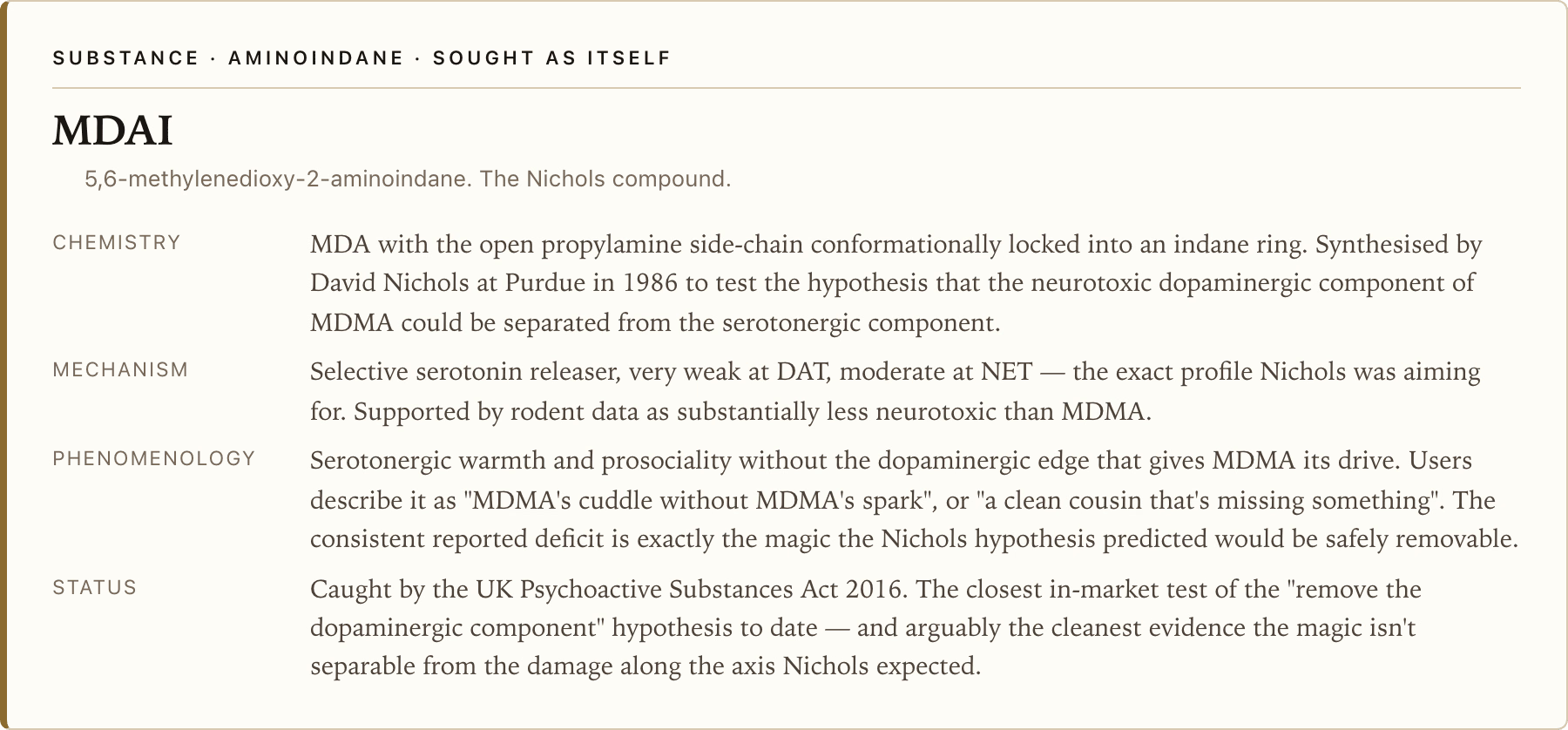
The safer-MDMA project did not start with the grey market. It started with David Nichols at Purdue, who synthesised MDAI on the hypothesis that the neurotoxic component of MDMA could be removed while keeping the prosocial component. The pharmacology was correct, but end users reported that it lacked the magic of MDMA.
The regulatory record is actively counterproductive. The 2010 cathinone ban was outrun by chemistry in six months. The 2016 PSA resulted in nine consecutive years of rising drug-poisoning deaths. China’s bans shifted the market to new chemicals whose harm profile was unknown. The Netherlands’ July 2025 ban will do the same.
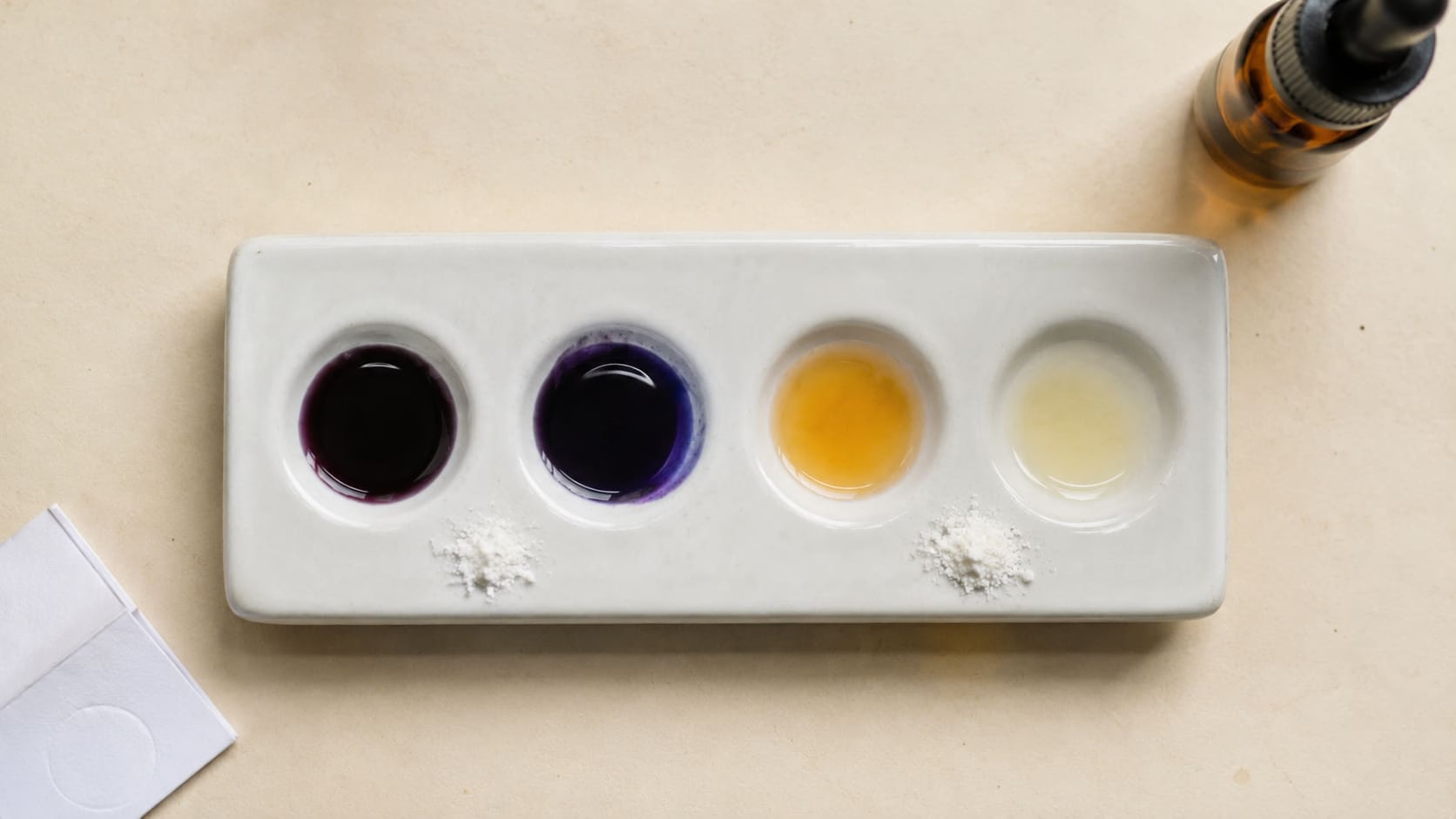
MDMA testing kits are available online. It takes just a few minutes, and it can save your life. If you don’t have a milligram scale, you can get one for about $20. Powders are easier to test and easier to dose than pills.
No prohibition action of the last twenty years has resulted in a reduction of drug-related harm in the population it was supposed to protect. What did reduce harm are the interventions that required explicit non-enforcement of supply-side law at the site of the intervention — The Loop, WEDINOS, DIMS, the EMCDDA early-warning system.
The strange epilogue is that some of the gray market compounds are now being investigated as medicines. Methylone, scheduled in the UK alongside mephedrone, is now fast-tracked by the FDA for PTSD, 3-MMC is being investigated for therapy.
Everything else has been worse than doing nothing. It hasn’t changed any policy.