There Is No Tank
You don’t have a morning tank of dopamine to spend wisely. Here is what you actually have.
There’s a kind of advice that you can hear very often, and it goes kinda like this. You have more dopamine in the morning, so you should “save” it by not checking your phone and going straight to important tasks. And if you didn’t do your important tasks in the morning and scrolled your phone instead, then you burned all the dopamine your body carefully prepared for you overnight, and you should immediately go on a dopamine detox lest you run out before nightfall.
(Almost) every part of this is wrong, and it’s wrong for one reason: an assumption most people take as true without ever checking it. The assumption is that dopamine is a stored quantity. A tank that you fill overnight and sip from throughout the day. Once you see the assumption you can see it under every piece of advice, and once you see why it’s false, the advice gets burned instead.
So let’s look at what dopamine actually is.
Made, then made again
Dopamine is a neurotransmitter that’s produced entirely in the brain, as it can’t cross the brain-blood barrier. The path looks like this: tyrosine → L-DOPA → dopamine. The last step is fast and usually not rate-limited. The first step requires an enzyme called tyrosine hydroxylase and a cofactor called BH4, and it’s rate-limited.
Despite what may seem like a tank that refills overnight, dopamine is instead produced continuously throughout the day. The effective half-life of striatal dopamine in a healthy human is about two hours, which means most of the dopamine you have right now was made this morning or, if you’re reading this in the morning, this night.
This turnover is self-regulating, as dopamine applies the brakes to its own production. When it accumulates, it inhibits tyrosine hydroxylase in feedback fashion by competing with BH4. Once the dopamine levels go down, the synthesis rate goes up again. This system functions less like a tank and more like a thermostat.
The releasing of dopamine is not equivalent to spending it. Most of the released dopamine is carried back into the cell by the dopamine transporter (DAT), where it’s repackaged into vesicles and then used again. The picture where every reward irreversibly “spends” some dopamine is simply not realistic.
Depletion mechanisms
But you can at least feel depleted. Where does all the dopamine go? There are two mechanisms which lead to the negative feelings.
The fast one: the brake
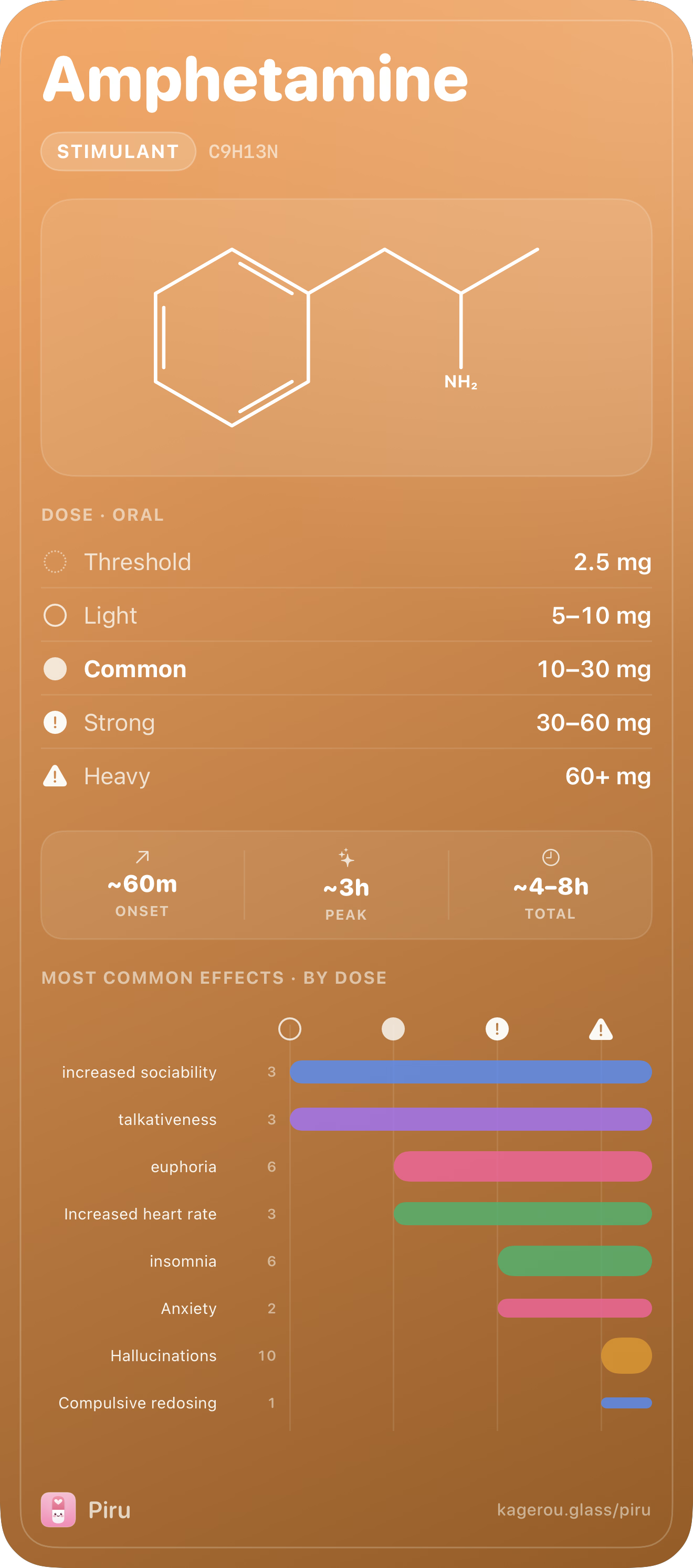
The first is that some stimulants do in fact drain the vesicular dopamine pool. A good example of it is amphetamine. After making it to the neuron, it empties the vesicles, where dopamine is normally stored, into the cell, and then runs the transporter in reverse. If the dose was high enough, you can experience a crash.
The tank picture has a good answer for the crash: you spent your dopamine, now you’re on empty. But that’s not what measurements show. Extracellular dopamine from a single dose, measured in the striatum with a probe, rises, peaks in twenty to forty minutes, and then rolls back toward baseline. It can go below, but it takes repeated dosing for a few days to get there. The same-day crash happens while dopamine is at, or even above, baseline. How does that work?
What you feel is not the dopamine itself but the gap between what the drug is forcing and what the system expects. In the beginning, there is far more dopamine than expected, which leads to the brain adjusting the expected levels upwards. This happens because amphetamine prevents dopamine from being packed back into the vesicles, which leaves them empty, as the synthesis is also slowed down. This is represented as a brake on the graph. Eventually the drive can’t keep up and goes below the brake, even as there’s still plenty of dopamine in the synapse.
I built the Effect Estimator in Piru around that principle. You set or log a dose, and it draws what the expected feelings are.
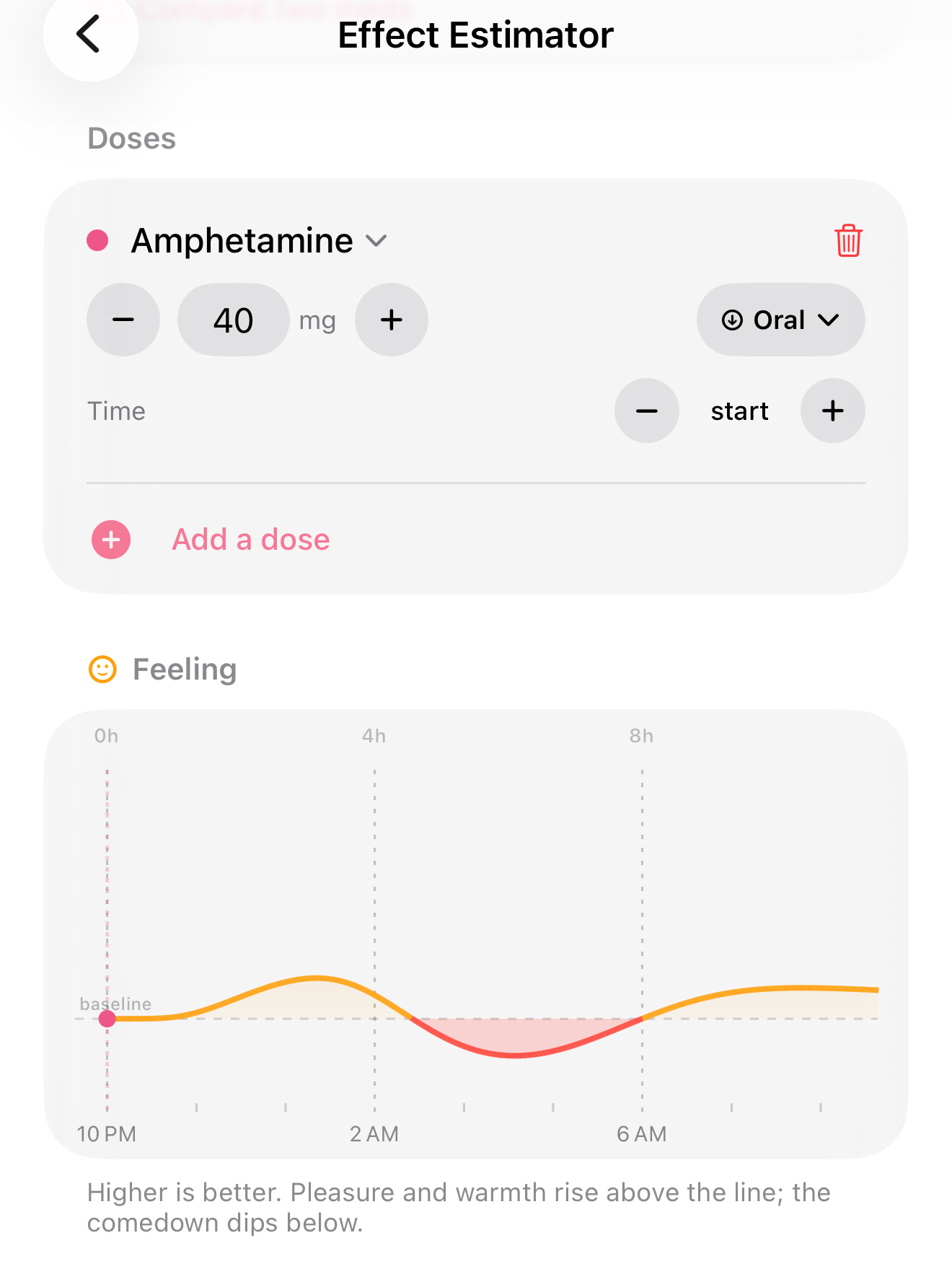
This mechanism also helps explain why the crash scales with the dose. There’s a limit to how much dopamine the terminals can throw into the synapse, but the crash has no such ceiling.
It also explains the redose paradox. If you take the same dose again a few hours later, you feel about a third of what you felt the first time. The tank would say that’s because there’s less dopamine, but there isn’t less. The second dose is added on top of the first one, so the dopamine peak it produces is even higher. This effect is called tachyphylaxis, tolerance within a single session.
Two identical doses, four hours apart. The second lands on a drug that hasn’t left, so it drives the higher dopamine peak of the two — and returns a fraction of the feeling, then a crash the first dose never produced.
There’s still a real depletion component. The emptied stores need to be refilled, and some dopamine does in fact get destroyed while outside the cell. But even that isn’t some kind of daily budget.
The slow one: receptors
The second mechanism is receptors. Even though the neurons can still be making and releasing plenty of dopamine, the cells receiving the signal can have their sensitivity tuned down. This effect is called tolerance.
However, tolerance is not reliably observed at chronic therapeutic doses. Some people report it, and the literature exists. But a systematic review of the studies found little or no evidence for it in the long term. Tolerance to the high is more pronounced and happens much faster. And tachyphylaxis is sometimes mistaken for tolerance. In any case, a single day without Twitter won’t save your receptors. The phenomena are either acute and presynaptic, or chronic and postsynaptic.
What about the morning
What about the morning then? That one’s simple: it’s mostly made up. There is a real rhythm in the dopamine system, but it runs on a cycle of hours — the dopamine ultradian oscillator. There’s one study that measured dopamine in the spinal fluid of some people, but most of them were movement-disorder patients. It reported a peak around ten in the morning, but it hasn’t been replicated since. Where a genuine daily rhythm does show up, in rodents, it turns out to be the transporter rhythmically changing how fast it clears dopamine.
It was never the reward chemical
The “reward chemical” is its own oversimplification, and it’s what feeds the budget picture. Dopamine has more to do with motivation and learning than with pleasure. Its fast bursts, called phasic signaling, encode reward prediction error (RPE): the gap between what you expected and the results. There’s no burst if there’s no surprisal. Its slower background (tonic) level represents the average expected reward in this environment, telling you how hard to keep trying, or whether it’s worth doing anything at all.
You don’t spend dopamine for a reward. Dopamine is what says if the results are better than expected, and if you should repeat it again.
All of this lands hardest in ADHD, because that’s where the whole budget talk is usually concentrated. There’s no clean picture of a low-dopamine brain in ADHD. The studies are contradictory, and the most reliable difference (dopamine transporter density) turned out on meta-analysis to track whether the person had taken stimulants before rather than ADHD, with stimulant-naive participants showing no elevation at all. And a stimulant like methylphenidate (Ritalin) doesn’t add any dopamine anyway. It blocks the transporters, thereby increasing the levels.
The popular phrase “dopamine detox” comes from Cameron Sepah, a clinical psychologist at UCSF, who wrote “Dopamine Fasting 2.0” in 2019. But it’s cognitive behavioral therapy, deliberately time-restricting compulsive behaviors to get some flexibility, and not a neurology piece. He wrote a follow-up called why the media lies to you about dopamine fasting, being frustrated at the frequent misreadings.
What’s actually left
So, here’s the conclusion, or the lack of one. Almost none of the dopamine tricks even work, and if they do, it’s largely unrelated to the theory that’s used to justify them. Dopamine isn’t a budget. It’s a constantly remade thing that self-regulates and is used by the brain to control what to pursue and how hard. It gets almost completely remade every few hours, so enjoying things in the morning won’t burn through it, and being bored for a day won’t magically fix anything. The tank was never there, but the brake is, and that is something you can break.
Play with the mechanism The brake, the gate, and three doors that feel identical from the inside. An interactive explorable you can poke.The figures marked as coming from the effect model are generated by the same engine that ships in Piru’s Effect Estimator. It treats the felt effect as the error between a drug’s dopamine forcing and the body’s homeostatic compensation.
References
- Nagatsu T, Levitt M, Udenfriend S. Tyrosine hydroxylase: the initial step in norepinephrine biosynthesis. J Biol Chem 239:2910–2917 (1964). PMID:14216443 — established tyrosine hydroxylase as the rate-limiting first step of catecholamine synthesis.
- Kumakura Y, Cumming P, Vernaleken I, et al. Elevated [18F]fluorodopamine turnover in brain of patients with schizophrenia: an [18F]fluorodopa/PET study. J Neurosci 27(30):8080–8087 (2007). doi:10.1523/JNEUROSCI.0805-07.2007 — striatal dopamine effective half-life ~2 h in healthy young controls.
- Walker MD, Dinelle K, Kornelsen R, et al. In-vivo measurement of L-DOPA uptake, dopamine reserve and turnover in the rat brain using [18F]FDOPA PET. J Cereb Blood Flow Metab 33(1):59–66 (2013). doi:10.1038/jcbfm.2012.120 — rat turnover half-time ~30 min, by the same tracer and kinetic-modelling framework as the human figure, from a different lab.
- Spector S, Gordon R, Sjoerdsma A, Udenfriend S. End-product inhibition of tyrosine hydroxylase as a possible mechanism for regulation of norepinephrine synthesis. Mol Pharmacol 3(6):549–555 (1967). PMID:6075244 — the first demonstration that catecholamine end-products feedback-inhibit their own synthesis.
- Daubner SC, Le T, Wang S. Tyrosine hydroxylase and regulation of dopamine synthesis. Arch Biochem Biophys 508(1):1–12 (2011). doi:10.1016/j.abb.2010.12.017 — dopamine competes with BH4 to inhibit the enzyme; Ser40 phosphorylation relieves it ~300-fold.
- Giros B, Jaber M, Jones SR, Wightman RM, Caron MG. Hyperlocomotion and indifference to cocaine and amphetamine in mice lacking the dopamine transporter. Nature 379(6566):606–612 (1996). doi:10.1038/379606a0 — without the transporter, striatal dopamine persists ≥100× longer: reuptake, not enzymatic breakdown, dominates clearance.
- Sulzer D, Sonders MS, Poulsen NW, Galli A. Mechanisms of neurotransmitter release by amphetamines: a review. Prog Neurobiol 75(6):406–433 (2005). doi:10.1016/j.pneurobio.2005.04.003 — redistribution of catecholamines from synaptic vesicles into the cytosol, plus reverse transport through the plasma-membrane carrier.
- Brauer LH, Ambre J, de Wit H. Acute tolerance to subjective but not cardiovascular effects of d-amphetamine in normal, healthy men. J Clin Psychopharmacol 16(1):72–76 (1996). PMID:8834422 — subjective effect peaks ~1.5–2 h and returns to baseline by 3–4 h while plasma is still rising; plasma peaks at 4 h, detectable at 24 h. Clockwise hysteresis against plasma level = acute within-dose tolerance. The "about half the drug is still present after ten hours" figure is the d-amphetamine plasma half-life (~10–12 h in adults, FDA label PK), not a number from this paper.
- Butcher SP, Fairbrother IS, Kelly JS, Arbuthnott GW. Amphetamine-induced dopamine release in the rat striatum: an in vivo microdialysis study. J Neurochem 50(2):346–355 (1988). doi:10.1111/j.1471-4159.1988.tb02919.x — single-dose dopamine peaks at 20–40 min and returns toward baseline, with no below-baseline undershoot.
- Rossetti ZL, Hmaidan Y, Gessa GL. Marked inhibition of mesolimbic dopamine release: a common feature of ethanol, morphine, cocaine and amphetamine abstinence in rats. Eur J Pharmacol 221(2–3):227–234 (1992). doi:10.1016/0014-2999(92)90706-A — below-baseline basal dopamine is a withdrawal phenomenon after repeated dosing, persisting for days.
- Handelman K, Sumiya F. Tolerance to stimulant medication for attention deficit hyperactivity disorder: literature review and case report. Brain Sci 12(8):959 (2022). doi:10.3390/brainsci12080959 — the clinical case for tolerance: physiological adaptation is demonstrable, clinical tolerance is reported but poorly characterised.
- Smith C, Walker H, Parlatini V, Cortese S. Tolerance and tachyphylaxis to medications for attention-deficit/hyperactivity disorder (ADHD): a systematic review of empirical studies. CNS Drugs 40(4):549–563 (2026). doi:10.1007/s40263-025-01263-8 — 17 studies; preliminary evidence of tachyphylaxis and of short-term tolerance to subjective effects such as drug liking, but little or no evidence for tolerance to the therapeutic effects in the longer term. Abstract only; nothing is quoted beyond it.
- Poceta JS, Parsons L, Engelland S, Kripke DF. Circadian rhythm of CSF monoamines and hypocretin-1 in restless legs syndrome and Parkinson’s disease. Sleep Med 10(1):129–133 (2009). doi:10.1016/j.sleep.2007.11.002 — the lone human across-the-day CSF dopamine study; n=8, mostly patients, unreplicated.
- Ferris MJ, España RA, Locke JL, et al. Dopamine transporters govern diurnal variation in extracellular dopamine tone. Proc Natl Acad Sci USA 111(26):E2751–E2759 (2014). doi:10.1073/pnas.1407935111 — the daily rhythm is a clearance-rate rhythm of the transporter, not a filled reservoir.
- MacDonald HJ, Kleppe R, Szigetvari PD, Haavik J. The dopamine hypothesis for ADHD: an evaluation of evidence accumulated from human studies and animal models. Front Psychiatry 15:1492126 (2024). doi:10.3389/fpsyt.2024.1492126 — forty years of evidence reviewed: dopamine is involved, but there is limited evidence for a hypo-dopaminergic state as such.
- Fusar-Poli P, Rubia K, Rossi G, Sartori G, Balottin U. Striatal dopamine transporter alterations in ADHD: pathophysiology or adaptation to psychostimulants? A meta-analysis. Am J Psychiatry 169(3):264–272 (2012). doi:10.1176/appi.ajp.2011.11060940 — elevated DAT tracks prior stimulant medication, not the disorder.
- Volkow ND, Wang GJ, Fowler JS, et al. Relationship between blockade of dopamine transporters by oral methylphenidate and the increases in extracellular dopamine. Synapse 43(3):181–187 (2002). doi:10.1002/syn.10038 — methylphenidate raises dopamine by blocking reuptake, dependent on ongoing firing; it does not release dopamine.
- Sepah CS. Dopamine Fasting 2.0 (2019), and the follow-up, Why the Media Lies to You about Dopamine Fasting — the original coinage, framing the method as stimulus control and explicitly not the reduction of dopamine.
- Breier A, Su TP, Saunders R, et al. Schizophrenia is associated with elevated amphetamine-induced synaptic dopamine concentrations. Proc Natl Acad Sci USA 94(6):2569–2574 (1997). doi:10.1073/pnas.94.6.2569 — paired raclopride-PET and microdialysis; the dopamine-fold to binding calibration the model’s peak magnitudes are anchored to.
Entered this 5th day of August, by ✚ 陽炎 ✚